
| Bathua |

|
 |

|
| File size | 1004460 |
| Original date | 2/17/07 1:45 PM |
| Resolution | 2048 x 1536 |
| Flash | Flash did not fire, auto |
| Focal length | 8.0mm |
| Exposure time | 1/177s |
| Aperture | 3.2 |
| Focus Distance | |
| Metering Mode | Partial |
| Camera make | NIKON |
| Camera model | E3700 |
| Sensor type |
 |
 ative ative |
 |
 |
Photo: |
Botanical name: Chenopodium album Family: Amaranthaceae (Amaranth family)
Synonyms: Anserina candidans, Atriplex viridis, Chenopodium album
Synonyms: Anserina candidans, Atriplex viridis, Chenopodium album
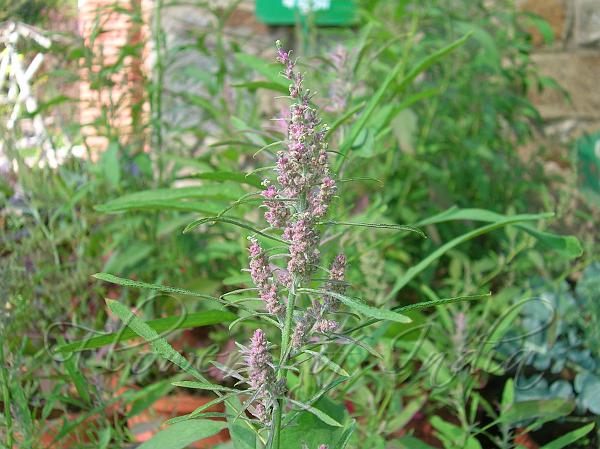
Bathua is a fast-growing, upright, weedy annual
species of goosefoot, very common in temperate regions, growing almost
everywhere in soils rich in nitrogen, especially on wasteland. Its
pollen can contribute to hayfever-like allergies. It tends to grow
upright at first, reaching heights of 30-80 cm, but typically becomes
recumbent after flowering (due to the weight of the foliage and seeds)
unless supported by other plants. The opposite leaves can be very
varied in appearance. The first leaves, near the base of the plant, are
toothed and roughly diamond-shaped, 3-7 cm long and 3-6 cm broad. The
leaves on the upper part of the flowering stems are entire and
lanceolate-rhomboid, 1-5 cm long and 0.4-2 cm broad. The leaves are
waxy-coated, unwettable and mealy in appearance, with a whitish coat on
the underside. The tiny flowers are radially symmetrical and grow in
small cymes on a dense branched inflorescence 10-40 cm long. Bathua can
be eaten as a vegetable, either steamed in entirety, or the leaves
cooked like spinach as a leaf vegetable. Each plant produces tens of
thousands of black seeds. These are very nutritious, high in protein,
vitamin A, calcium, phosphorus, and potassium. As the english common
name suggests, it is also a very good feed (both the leaves and the
seeds) for chickens (hens) and other poultry.
| Identification credit: Tabish | Photographed in Garden of Five Senses, Delhi. |
• Is this flower misidentified? If yes,