
| Cajuput Tree |

|
 |

|


| File size | 733367 |
| Original date | 8/12/07 2:07 PM |
| Resolution | 2816 x 2112 |
| Flash | Flash did not fire, auto |
| Focal length | 72.0mm |
| Exposure time | 1/100s |
| Aperture | 4.5 |
| Focus Distance | |
| Metering Mode | Multi-segment |
| Camera make | Panasonic |
| Camera model | DMC-FZ7 |
| Sensor type | OneChipColorArea |
 |
 ntroduced ntroduced |
 |
 |
Photo: |
Botanical name: Melaleuca leucadendra Family: Myrtaceae (Bottlebrush family)
Synonyms: Cajuputi leucadendron, Melaleuca leucadendron
Synonyms: Cajuputi leucadendron, Melaleuca leucadendron
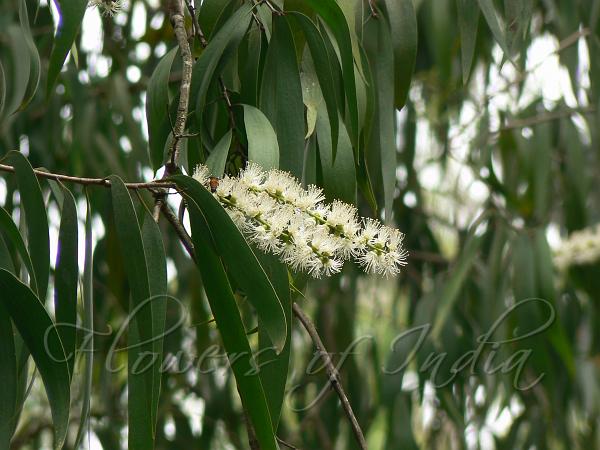
The name of Cajuput Tree is derived from the Malay word Kayuputi -
meaning "white wood". The botanical species name also comes from from the
Greek leukos (white) and dendron (tree). The tree has a long
flexible trunk with irregular ascending branches, covered with a pale
thick, lamellated bark it is soft and spongy and from time to time throws
off its outer layer in flakes; leaves entire, linear, lanceolate, ash
colour, alternate on short foot-stalks. White stalkless flowers occur on
long spikes, reminiscent of bottle-brush. The leaves have a very aromatic
odour and the oil is distilled from the fresh leaves and twigs, and is
volatile and stimulating with an aroma like camphor, rosemary, or cardamom
seeds.
Medicinal uses: Traditionally, the leaves of this plant have been used for healing skin
cuts, burns and infections. Recent studies have revealed its antifungal
property, making it an important ingredient in treating scalp infections
like dandruff. Cajuput Oil is also helpful in treating respiratory
problems.
Traditionally, the leaves of this plant have been used for healing skin
cuts, burns and infections. Recent studies have revealed its antifungal
property, making it an important ingredient in treating scalp infections
like dandruff. Cajuput Oil is also helpful in treating respiratory
problems.
Medicinal uses:
Traditionally, the leaves of this plant have been used for healing skin
cuts, burns and infections. Recent studies have revealed its antifungal
property, making it an important ingredient in treating scalp infections
like dandruff. Cajuput Oil is also helpful in treating respiratory
problems.| Identification credit: Dinesh Valke | Photographed in Veermata Jeejabai Bhosale Udyan, Mumbai & University of Calicut. |
• Is this flower misidentified? If yes,